
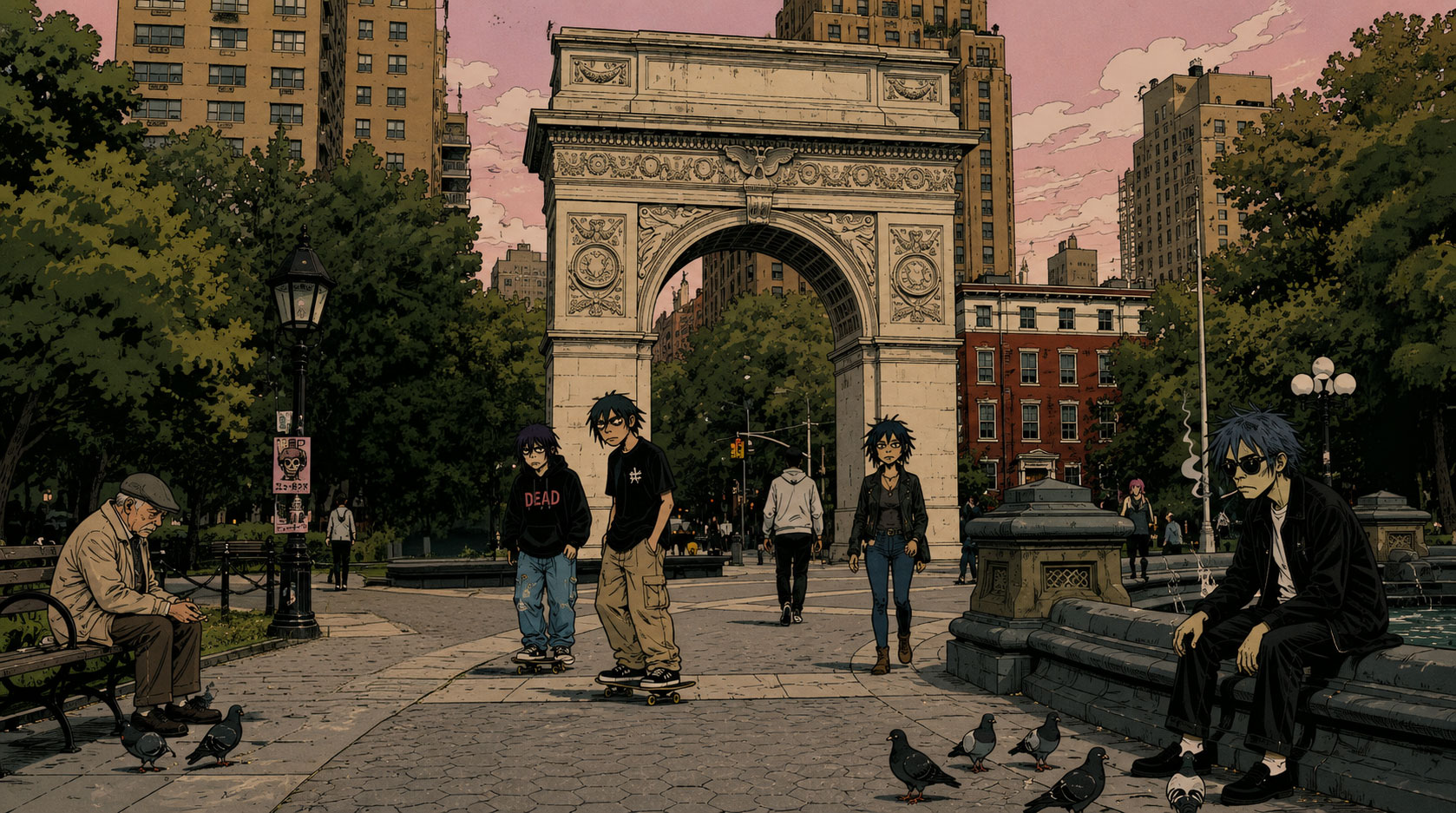

Harmony Korine was nineteen years old when he wrote Kids. He wrote it in three weeks. He told Larry Clark — the photographer who would direct it — “I’ve been waiting all my life to write this story.” He had been sitting in Washington Square Park watching teenagers from broken homes and writing down what he saw. Not characters. People.
That’s where Kids begins and it’s where most conversations about it end. As a document. As evidence. As something that happened to be filmed rather than something that was made.
That reading undersells it.
Kids is a 91-minute film that takes place over one day in New York City in 1995. Telly, played by Leo Fitzpatrick, is a teenage skater whose singular goal is to have sex with virgins. Casper, played by Justin Pierce, is his best friend. The film follows them through the city — Washington Square, apartment parties, bodega runs, subway rides — while Jennie, played by Chloë Sevigny in her first film role, discovers she’s HIV positive after a single encounter with Telly and spends the film trying to find him.
Nothing about that plot summary prepares you for what the film actually is.
Clark cast real New York street kids. Harold Hunter, a skater from the Lower East Side, was the one who brought the nineteen-year-old Korine into that world and eventually into the film itself. Most of the cast had no acting experience. Some of them were playing versions of themselves. When the film came out people thought it was a documentary. Clark shot it that way on purpose — handheld, urgent, no distance between the camera and what it was looking at.
Disney owned Miramax at the time. They saw the finished film and wanted nothing to do with it. Bob and Harvey Weinstein had to buy it back from Disney and create a separate distribution company just to release it unrated. The NC-17 rating it would have received was a commercial death sentence. They released it without a rating. It made $20.4 million on a $1.5 million budget.
Rosario Dawson was in it. First film. Chloë Sevigny was in it. First film. Justin Pierce won an Independent Spirit Award for Casper. In 2000 Pierce died by suicide in Las Vegas. He was twenty-six. Harold Hunter, the real skater who made the whole thing possible, died of a cocaine-induced heart attack in 2006. He was thirty-one.
The New York in Kids doesn’t exist anymore. Washington Square was cleaned up. The Lower East Side gentrified. The specific combination of poverty, freedom, and consequence that produced those teenagers and that film has been replaced by something safer and less true. You can watch Kids now and feel the distance — not just from the film but from the city it was made in, from the idea that a city could contain that much unsupervised life happening all at once.
That’s what makes it hurt in 2026 in a way it didn’t necessarily hurt in 1995. In 1995 it was shocking. Now it’s elegiac. A record of something that ended and was never replaced with anything as honest.
Larry Clark said he wanted to make the teenage movie that America never made. He made it. Then America made sure it would never happen again — not the film, not the city, not the nineteen-year-old sitting in Washington Square writing down what he saw.
Korine went on to make Gummo, Spring Breakers, and a dozen other things. Clark kept photographing. The kids mostly disappeared back into the city that disappeared around them.
Watch it. Then watch it again and notice what you’re actually mourning.
ALL CAPS. ALWAYS.
— Sato